

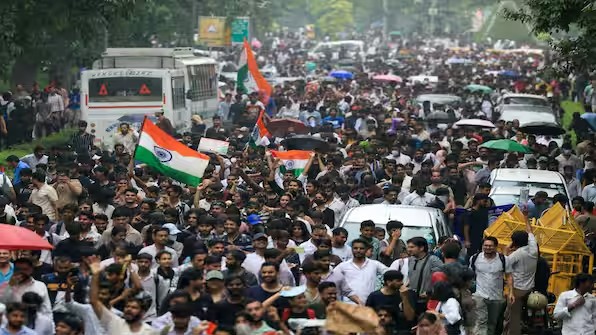
The protests, led by the CJP, were triggered by the alleged NEET examination paper leak and broader concerns over transparency, accountability, and youth unemployment.
The agitation began in June, with thousands of students and young people gathering at Delhi's Jantar Mantar before the movement spread to several cities across the country. Protesters demanded a fair examination system, strict action against those responsible for exam irregularities, and the resignation of Union Education Minister Dharmendra Pradhan. The movement gained widespread support through social media, with Gen Z using digital platforms to mobilise participants and amplify their demands nationwide.
After weeks of demonstrations and negotiations, the government announced a series of measures, including the resignation of Education Minister Dharmendra Pradhan, commitments to reform the examination system, withdrawal of legal cases against protesters, and compensation for families of students who reportedly died by suicide following the examination controversy. Protest leaders described the government's decision as a victory for students and democratic participation.
Following the announcement, the CJP officially called off its 36-day nationwide protest, stating that it was ending the agitation in good faith after the government accepted its principal demands. However, organisers clarified that their broader campaign for education reform and accountability would continue through peaceful and democratic means.
Political analysts believe the movement has highlighted the growing influence of India's younger generation in shaping public policy. The protests reflected widespread frustration among students over examination integrity, employment opportunities, and governance. Many observers have described the outcome as a rare instance of the government yielding to sustained public pressure from a youth-led movement.
The Gen Z protests have also drawn international attention, with commentators comparing them to youth-led movements in countries such as Bangladesh, Nepal, Kenya, and Indonesia, where young citizens have increasingly used peaceful demonstrations and social media to demand political and institutional reforms.
While the protests have concluded, many students maintain that this marks the beginning of a longer effort to strengthen transparency, fairness, and accountability in India's education system. Protest leaders have pledged to closely monitor the implementation of the government's promises and continue advocating for systemic reforms in the months ahead.

टिप्पण्या (0)
लॉगिन किंवा नोंदणी टिप्पणी देण्यासाठी.